The Elegance of the Hedgehog

I have just finished reading an extraordinary book entitled, “The Elegance of the Hedgehog.” I read it for a book club that I lead once a month, but I did not select it. It was chosen by a friend of mine and I must admit, I was sceptical at first. As a matter of fact, I was still sceptical a quarter of the way in, much like one is sceptical of an odd new acquaintance that they just might like to befriend, but they’re not quite sure. Yet the story and the characters so richly developed as I made further progress, that I could not help but be swept away by the poignance, beauty, and humanity that was exhibited in it’s pages. As I began the book, I felt that there was a pervasive cynicism that would be hard to overcome for someone as deliberately optimistic as myself. The two main characters were so isolated in their own minds, that they themselves had a hard time overcoming it. But it was this change from cynicism to hope that gave the book it’s depth. It was utterly beautiful to walk beside, and actually in the very minds of these two women as they learned to believe in humanity and the endless potential hidden in some people that we are fortunate enough to really see and call friends. The story is saturated in philosophy and psychology, which can make it a bit burdensome at times, but also intellectually stimulating and enriching. Because it ends with such a worthy example of what I am trying to accomplish here in my blog, finding beauty in the little thing and using those beautiful moments as building blocks of our happiness, I thought I would share the book with my readers along with my definite stamp of approval.

“In a bourgeois apartment building in Paris, we encounter Renée, an intelligent, philosophical, and cultured concierge who masks herself as the stereotypical uneducated “super” to avoid suspicion from the building’s pretentious inhabitants. Also living in the building is Paloma, the adolescent daughter of a parliamentarian, who has decided to commit suicide on her thirteenth birthday because she cannot bear to live among the rich. Although they are passing strangers, it is through Renée’s observations and Paloma’s journal entries that The Elegance of the Hedgehog reveals the absurd lives of the wealthy. That is until a Japanese businessman moves into the building and brings the two characters together. A critical success in France, the novel may strike a different chord with some readers in the U.S. The plot thins at moments and is supplanted with philosophical discourse on culture, the ruling class, and the injustices done to the poor.”
Review by Heather Paulson found on Amazon.
Unlikely Friends

I am a people person. Far more than most. Although, I think getting older has made me a bit more cynical or selective about who I chose to befriend. But I recently found myself wondering if that is a good thing. Shouldn’t age and wisdom teach us tolerance and open-mindedness rather than keep us bound to the immaturity of judgementalism? All people, from all ages, walks of life, classes, and cultures have something to offer. We can all learn from each other if we are open enough to receive the lessons. Even from people we deem to be beneath us. Perhaps especially from them. I have learned more from my son in the two years he has been on this planet than I have from many of the “intellectual” adults I have encountered. I have learned more from old people who many would call out-of-touch than I have from some of the hippest acquaintances I have made. Some people who I may have initially thought too immature to contribute much to a balanced friendship, end up being the light-hearted relief that I crave in the middle of an otherwise stressful time. Others, for whom everything seems to come easy, who have never had to fight for their supper and electricity, may once have spawned jealousy in me, but lately inspire gratitude for the richness that the struggle has brought to my life.

Unlikely friends

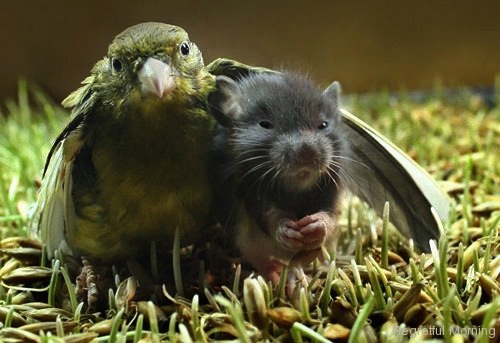
This awareness of the unseen value in friendships that we might not have initially given much of a chance, came yesterday as my husband was making plans with a relatively new friend. Without being asked, I volunteered that I was not very fond of this friend. My husband was quick to point out that I used to say the same thing about another of his buddies who’s friendship I now consider myself lucky to claim. If he had not prodded me to overcome my initial judgements about that person, I would have missed out on a valuable, affirming, kind relationship simply because I was too closed minded to be accepting. Patience with people is an immeasurable virtue I am only beginning to comb the depths of. Acceptance of differences is what connects us with people unlike ourselves and these people then bring balance and change to our lives in ways our other similar, like-minded friends never could have. Friendships come in all kinds of packages and sometimes it’s the oddest looking ones that have the most valuable contents.

Nostalgia Covers a Multitude of Sins

There are moments we know, without a doubt, that we will remember fondly. But it doesn’t mean that those moments were completely idyllic or picturesque. Often times, as we dive back into our memories, they are blanketed with a think layer of nostalgia that covers a multitude of sins. Family gatherings, for instance, are often fraught with familial tensions. Unspoken but implied criticisms. Hurt feelings or frustrations. But these are not the things we remember. We remember with rose-colored glasses the good times. The unguarded enthusiasm of children experiencing things for the first time. The brash and also unguarded comments of the aged who no longer feel the need to bother with social niceties. Fingers in mixing bowls getting smacked by mammas. Christmas presents opened just a smidge at the corner when no one was looking. Or endless games of monopoly in which we seek to dominate our beloved.

But it struck me this weekend as I experienced just such a moment of pure nostalgia in the making, that it is often incredibly hard to get past the difficulties that exist in those moments so that we can see, all around us, the things we are sure to remember fondly. Why is it that we so often only appreciate things that have already passed? It is because we’re too busy dealing with the stresses of the present to notice. But shouldn’t our memories, time and time again, be a lesson to us to let go of the things that don’t matter in the present? If we can just find it in us to brush off a harsh word, let go of unwarranted criticism, or never return the slight of someone else in kind, we can remember, in the present, the love that holds us together and the joys that are the building blocks of our memories.

This weekend found me and my family in a very small town in northern Mississippi where my husband was participating in a reunion concert for a local band who’s first gig occurred 40 years previous. It was astonishingly beautiful. Already, I remember it warmly. But I do regret allowing myself to be taken up with some of the stresses that surrounded the weekend. Some of them were silly stresses. Some of them serious. But none of them will factor into the beauty of the memory. What did it matter, in the long run, if the hotel room was old and small? Or if my sick son was a bit whinny and slept in my arms for most of the concert? That, in and of itself, will bring a smile with its memory. Was it really justified of me to feel somewhat jealous of the time I didn’t get to spend with an old friend when he was surrounded by family, friends, and a girlfriend he doesn’t get to see often enough? Should I have allowed myself to embody the stresses of those around me who were prepping for the concert or dealing with their own family tensions? Or should I have been an oasis for those same people – a stress free zone to refresh their mind and spirit? Of course, none of these difficulties compared with the wonderful beauties that the weekend afforded. Such as the constant bombardment of strangers telling me how wonderful my husband was both as a person and as a musician and how much they appreciated his help over the last several months. Or seeing the pure excitement on my son’s face, despite being sick, as he watched his daddy play in a concert. Or witnessing old men relive the passions of their youth with unrivaled enthusiasm and the support of their home town for their endeavor. And seeing a mother dance with her grown son, my friend, as though no one was watching and imagining myself and my son, who was sleeping in my lap, dancing in their shoes in the not so distant future. This is the stuff of life. All the rest is not worth remembering, and so, it is not worth dwelling on.

Embracing the Clichéd

In today’s society, where individualism is hailed as one of the highest virtues, we are often afraid of being too clichéd. The phrase, “That’s such a cliché!” is used as an insult. But sometimes I find myself wondering, is it really such a bad thing to be somewhat predictable, normal, or even unoriginal? Some things are clichéd for a reason. Because they have stood the test of time and multitudes and still hold true. I’ve taken flack from plenty of friends and sometimes my own alter-ego, for my desire to move to the suburbs. And I must admit, the individualistic, young, and still edgy side of me cringes at the idea of moving into a cookie cutter, “stepford” neighborhood, with picket fences, matching roof lines and tiny trees. But not all the suburbs are so scary. And some things are more important than being in the middle of it all. Like my son’s education. I certainly see the value in sticking it out and fighting for better education in the city rather than fleeing, but I will not use my son’s future as a weapon in that battle. And then there’s crime. Does staying put and risking the robbery of my possessions and possible harm of my family help bring crime levels down in the city or should we just move to where it is safer? But considering these things makes me wonder if I have been too quick to judge others in the past. Most of the suburbanites have probably had similar lines of reasoning that brought them to where they are today. Most of them probably have histories and lives every bit as interesting as mine, or more so. And yet I have been guilty of looking at them and thinking, “What a cliché!” We are taught from such an early age to never judge a book by its cover and yet we fight judgementalism well into adulthood and old age.

Yesterday, as my son and I were downtown enveloped in a sea of people who had gathered to celebrate Independence Day, I found myself looking around at all the faces and imagining the stories behind their eyes. We are all on wildly different journeys, and yet, too often we tend to approach people as though they should be in the same place we are. The whole event for which all these people had come together was, in and of itself, an incredible cliché. Americana at its finest. There were flags and people in patriotic attire, face painting and glow sticks, catfish and burgers, and an orchestral band playing “Yankee Doodle.” There were kids everywhere and frazzled parents trying to keep up with them. There were lawn chairs and lovers making eyes at each other. And of course, there were fireworks. But there was something beautiful and calming about the cliché. So many different people, from different walks of life and in different places in their journey, coming to celebrate the same thing. And celebrate it in the same way it has been celebrated for generations. It may be a cliché, but it is a damn good one and I’m happy I was part of it.

There are hundreds of paths up the mountain,
all leading in the same direction,
so it doesn’t matter which path you take.
The only one wasting time is the one
who runs around and around the mountain,
telling everyone that his or her path is wrong.
~Hindu teaching

Reminding Ourselves to Remember

I recently had the opportunity to revisit one of my favorite childhood pastimes – something I hadn’t done in over a decade. I went roller skating. Was I taking Aiden for his first experience with wheels on his heels? No. Was I attending a birthday party for some friend’s child or chaperoning some other young person’s event? No. I was just reliving the good ol’ days with some coworkers and the nostalgia of it was overwhelming.

It was yet another reminder to appreciate things as they are happening and not as we look back wistfully in the rare opportunities that we have to relive them. Although I loved roller skating as a child and even as a teenager, I don’t think I ever slowed those wheels down long enough to savor the experience and recognize that I wouldn’t be able to do it forever. I’m certainly not saying that we should take every happy, wonderful moment full of innocence and joy and make it serious, sober, and appreciative. But rather that we should learn to take mental snapshots. We are all so very good at taking digital photos these days – capturing flat, visual representations of the things we experience. But there is so much more to those memories. There are smells, tastes, sounds, feels, emotions, thoughts . . . all connected in an intricate web of vitality. And our minds are capable of cataloging all of it – if we would just take a moment to breathe and remind ourselves to remember. Tell ourselves in a fraction of a second, “This is good!”

As I looked around the rink at all of the other skaters, most of them half my age, I found myself wondering how many of them would remember. The twelve-year-old boyfriend and girlfriend with matching T-shirts skating hand in hand in countless circles. The new recruit to the roller derby team, getting a strong sense of her stride. The flamboyantly gay twenty-something spinning pirouettes at each turn and squealing with delight, not caring what anyone else thought of him. The middle-aged, excessively bearded beginner skating back and forth in the center at a painstaking pace, trying to prove that you can teach and old dog new tricks. The six-year-old little girl with white skates just like mine who put my moves to shame. Will all of these people find themselves in this spot a decade later trying to pull the cobwebs off of these memories? Or will these moments flood back with a vivid force because they LIVED them now? I am very glad I took the opportunity to experience this small part of my past again. And this time I drank it in deeply and will not easily forget.