Designing Daydreams

There are several factors playing into my desire to redecorate. The first is the perpetual and seemingly endless search for a new house. We have put an offer on a new place which, despite the uncertainty of actually attaining it (since we have to sell ours before we do), sends my mind buzzing into frenzies of interior design daydreams on a regular basis. The second is that it’s been three years since we moved and, since that time, I have not done ANY redecorating. No matter how pleased you are with your initial design ideas, after three years, they get a little stale.  The third, and probably most pressing, is that my little baby boy is not so much of a baby anymore. He is a big kid with big ideas and  . . . a nursery for a room.  He sleeps in a crib converted to a toddler bed that he barely fits in anymore.  The mobile is still attached to it for heaven’s sake.  It’s time he had a change.  New house or not.  So I’ve started brainstorming some ideas and I thought I’d share some of the things I’ve discovered.
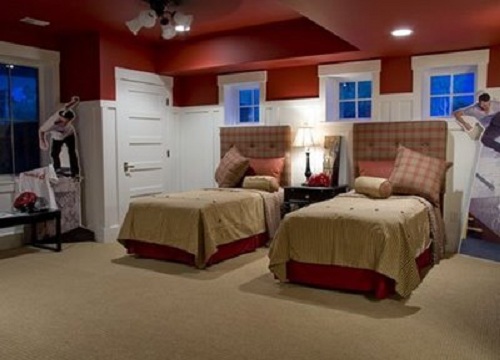
I love the idea of using interesting color schemes on the walls. This is a very unique reversal of how most people paint a room . . . white on the bottom, color on the top. Quite striking!
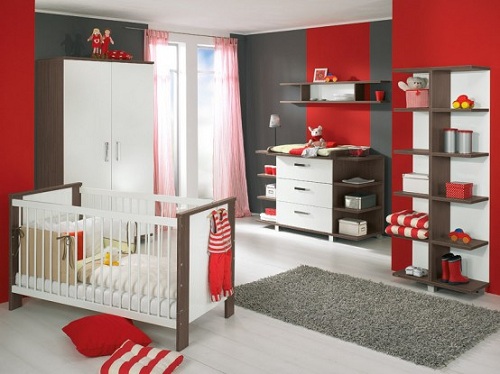
Speaking of interesting colors on the walls, WOW! I don't know if I'd be brave enough to do something quite this bold, but it sure is remarkable!
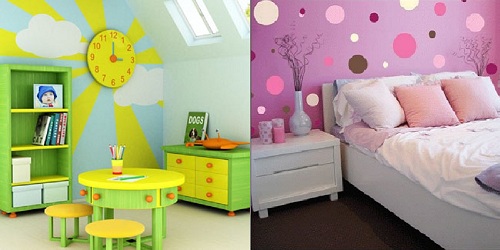
Then there's always the option to do something crazy and decorative on the walls in the form of a pattern or a mural. I could definitely see myself doing a simple burgundy sunburst pattern in the corner of a room with light brown walls and then incorporating the same red tone into other room accents. As far as polka dots go, I'm not sure I could handle them on all of the walls, but ONE wall could be really fun.

Another unique and inexpensive way to revamp a room is to use fabric on the walls. This, of course, is a rather girly example, but I loved it so much I just couldn't pass it up.

If I had unlimited funds to buy new furniture and dramatic accessories, I could totally see myself doing something like this. I LOVE the "porch" swing sofa and the map rug!

We may actually look around for some affordable bunk beds. No boy's room is really complete without them, in my humble opinion. This is a perfectly playful bunk bed that would be SO much fun, it might make sleep hard to come by!

Lastly, I couldn't help myself from veering a little in the girly direction - we are after all hoping our next kid is of the feminine persuasion. There is something so lovely about this green and pink combination. I would probably add tan to the mix and make it a bit less flowery, but I love the color palate.

Tell me what you think.  I’d love to hear some other unique ideas for kids rooms.  This is only the beginning of my brainstorming and there’s lots of room for new concepts!
Laughter is the Best Medicine

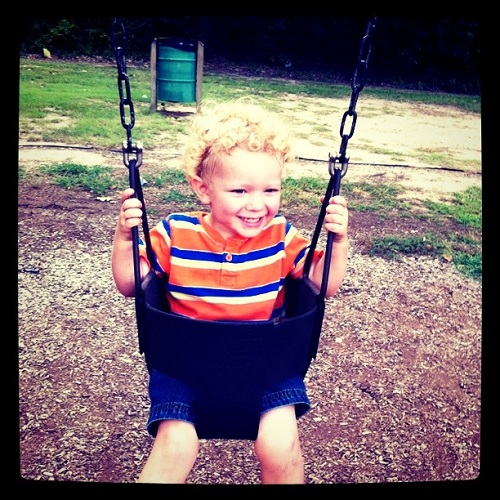
It’s true what they say that laughter is the best medicine. Today I had the distinct privilege of spending my Sunday morning in an after-hours clinic because of a stabbing headache that has lasted 3 days (and counting). I thought it might be due to an ear infection, otherwise I might have toughed it out. But I was fully prepared, upon leaving the clinic with no helpful news, to embark upon my terrible day full of head pain and crabbiness and exhaustion. Thankfully my boys had other plans. Jonathan took a sick day so he could take care of Aiden while I went to the doctor and he managed to wash, fold, and put away all the laundry and do the dishes while I played with Aiden, took a nap and read my book. Yes, I am a lucky woman. And we both discovered (again) that there is nothing quite like the laughter of a child to make you forget your woes. Aiden was in a remarkable mood and was constantly finding something to giggle about. Like pretending that dozens of kitties were coming out of the tiny box in his hand and tickling us with their tongues. Or spinning in circles till he collapsed on the floor and watched the room spin out of the corner of his eye. Later, because we were all getting cabin fever, and I wasn’t about to cook, we picked up some supper and went to the park.  There was a storm brewing and it was gloriously breezy for such a hot afternoon.  Aiden tromped around the park barefoot, in true boy fashion, and laughed at everything he saw. And not just little laughs. These were full-faced, throw your head back kind of laughs that were absolutely infectious. 

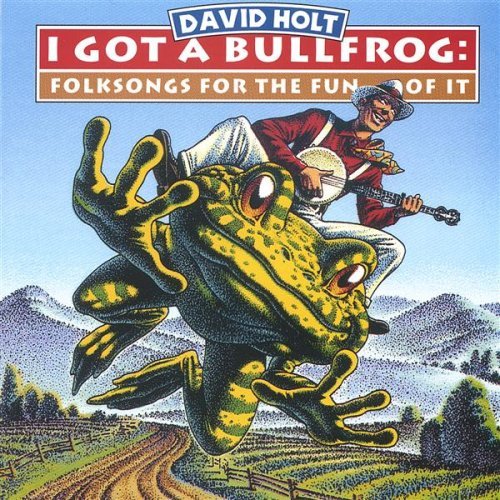
As we drove home, Aiden requested his favorite music, an album of high quality children’s bluegrass by David Holt. And, as always, he requested his favorite track, “I Got A Bullfrog,” which is a musical blooper of epic proportion consisting of at least 30 seconds of laughter that the singer is trying desperately and unsuccessfully to get under control. I LOVE that they left this “mistake” in the recording. Every time it comes on Aiden grins from ear to ear in the back seat and laughs along.  I can’t help but join him no matter how many times I have heard it. 

At home, after supper, I let him have a piece of cake and after every bite, he wriggled with glee, doing an excited little cake dance while he . . . you guessed it . . . laughed.  By the end of the day as I felt the piercing pains in my head again, I realized that although the pain had persisted all day, I had not thought about it in hours.  It had not dominated my day as I had feared it would.  And I had laughter to thank. I wonder how much healthier, and of course happier, we would all be if we learned to be a bit more light-hearted and laugh a lot more readily.

Are Your Crutches Disposable?

What is a crutch? It is something that holds us up when we cannot stand on our own. Physically, emotionally, mentally. We all have them. But a crutch can be a good thing or a bad thing. Where the line is drawn is often vague. A simple question to ask ourselves is, do our crutches help us get somewhere we could not otherwise get on our own? If we are able, but unwilling to move forward without them, then they are enabling our weakness. We would be stronger if we could let them go and walk on our own.

My son, at two and a quarter, decided, by himself, to give up his paci because pacis are for babies. This was something that he had leaned on for comfort and calm his entire life. He had never spent a night without one. But, realizing that he was big and strong and didn’t need it for the same reasons any longer, he let it go. Not entirely without struggle, but most things worth attaining do not come without struggle. Similarly, I, after ten years of relying on nicotine for stress relief and relaxation, have learned that I am capable of handling stress in different ways. Better ways that do not harm me physically. And I have let it go. Not perfectly, and again, not without struggle, but I now no longer lean on that crutch for stability.

There are so many things in our daily lives that serve as crutches to help us avoid the pain and struggle of learning to walk alone. Television, alcohol, video games, social networks, you name it. As infants, none of us can walk without a crutch or a prop of some kind until we learn to stand stably on our own two feet. This is true of emotional stability as well, but unfortunately we have many emotional infancies. Moments of rebirth or redefinition that require us to prop ourselves up till we regain our footing. And those props often become so familiar and comfotable that we have a difficult time letting them go and learning to be stable again. And then, sometimes, certain things happen that leave us crippled in such a way that we cannot stand on our own without the aid of something or someone else. And that is okay. Recognizing weakness that cannot be worked through alone is a brave and noble thing. One that we should never be ashamed of. On a recent trip to the zoo, my son saw a crippled man walking with braces because his legs were bent. And, in typical toddler fashion, he loudly exclaimed, “Mommy, what’s that?” Rather than shush him as many parents are apt to do, I told him openly and within earshot of the man that those were crutches that helped the man walk because his legs were hurt and he couldn’t walk on his own. Amazingly, the man smiled and the look in the his eyes could only be described as relief that someone had actually acknowledged him. And I found myself wondering how it must feel to walk through life with no one meeting your eye because they are ashamed to acknowledge your handicap. How often are we ashamed to acknowledge each others weaknesses. To look one another in the eye and affirm, non-verbally, that we have nothing to be ashamed of.

So which are you, the man walking with a cane not because he needs it but because he finds it debonaire while everyone else finds it ridiculous? Or the man who has a handicap he cannot overcome without the help of a crutch, but with which he can accomplish so much?

Compliments or Criticisms?

There is extraordinary power in the words we speak to one another. Be they negative or affirming, they are capable of completely making or breaking a moment, a day, a relationship. This, of course, is more true of some of us than others. I am a word person. I have never taken any of the “love languages” tests, but if I did, I feel fairly confident that ‘words of affirmation’ would be the primary vocabulary in which I speak. (‘Receiving gifts’ would be second, but that’s an entirely different blog post!) My husband, on the other hand, is an ‘acts of service’ kind of guy. He will do whatever needs doing without blinking an eye. He thrives on taking care of me and our son. Need groceries? He will go, after a long day at work, to get them in order to spare me the hassle of going with a toddler. Is there a huge mess after the elaborate supper I just created? He’ll clean it all up while Aiden and I play so that I don’t have to cook and clean. Getting behind on the laundry? He can do it while listening to a podcast (one of his favorite pastimes), so no biggie! I know that I am extremely lucky. Many women would kill for what I have. I recognize these things are a demonstration of love that I would never trade. Unfortunately, they just don’t speak to me as a gesture of affection. Whereas a note left by my coffee in the morning will make my entire day. Or an offhanded remark about my outfit will make me feel sexy for a week. Why is it that such seemingly frivolous things seem to speak so much more loudly to me than practical things that really matter? I think the answer lies in the availability, or lack thereof, of such affirming words. Not just between husbands and wives but in all types of relationships. We as a society are, unfortunatly, not in the practice of lifting one another up – being generally encouraging or even interested in others. And this lact of verbalizing about things we admire, makes the rare compliment seem so unusual and valuable. I want to change this aspect of society. Every time I think something nice about someone else, I want to have the nerve to speak it, knowing it will probably make their day.

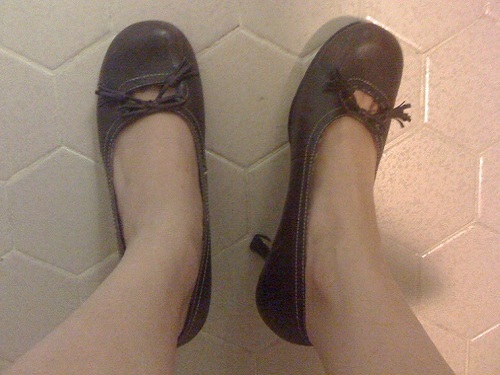
We tend to be so much better about doing this naturally with children. “Good job, sweetheart! What a beautiful picture you drew!” And yet, for some reason, we assume that, as adults, we just don’t need encouragement. We’ve all got this thing called life down pat by now, we shouldn’t need someone telling us what a good job we’re doing at it. But even if we don’t need the encouragement to succeed, it sure makes the path so much more rewarding! My husband recently went on a short business trip and when he returned, he seemed to be buzzing for days. When I asked him where all his positive energy was coming from, he said that he had met someone on his trip who was exceptionally good at being interested in and encouraging everyone that he met. And it was sincere and uplifting and inspiring. Why are people like this so rare? Why do we find it so hard to say nice things about and to one another? Shouldn’t this be the norm rather than the exception? I have a friend who taught me to fly a remote control helicopter. I was a natural, if I do say so myself, but I didn’t have to say so myself because he said it to me. As I was leaving, he kissed me on the head and said I did such a good job and that it was rare for someone so new to flying to do so well. Such a small and insignificant thing, but it made me feel good for days. I hope and pray we are training our son well in this aspect of life and relationships. And lately, he’s been complimenting me at such a rate, that I think we are succeeding. The other day as he was bent over for me to wipe his booty, he said, “Oooh, mama, I yuv your bootiful shoes!” I smiled all day. Later that week as I was trying on some clothes at a thrift store, he repeatedly told me, “I yike dat one! Dat one’s nice mama!” And these are not just the cute nothings of a two year old. They mean something! Perhaps we should all take note and learn to praise with the unreserved honesty of a child. If we complimented half as much as we criticized, we’d probably all feel a lot better about ourselves . . . or at least our footwear.

Dance with more than just your toes!

I admire the lack of inhibition in children.  Of course it has it down side, but for the most part, I think it is a trait to be nurtured and emulated.  Children have not yet learned to be afraid of what other people think of them.  They simply experience the world around them and engage it with undaunted enthusiasm and vigor.  A rather potent example of this is dance.  We are all hardwired to dance.  It is part of our nature as human beings to physically respond to music.  I have never met a young child who did not dance.  It begins almost as soon as they are able to make voluntary movements and continues till the time they learn to be afraid.  A baby who cannot even sit up by himself will bob his head to music and older children will jump and bounce and swing around the dance floor with an excitement that cannot be held back – as though they can’t help it.  And why should they?  It’s natural, joyous, active, FUN.

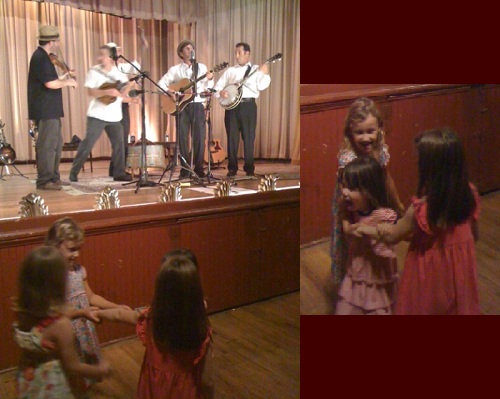
Children dancing at the "Delta Mountain Boys" concert at the Southern Cultural Heritage Center.

I recently attended a bluegrass concert where the music was as lively and dance-inducing as it ever gets.  And, as I looked around the room, I noticed that every single adult, without fail, sat straight and calm in their seat while their feet bounced in rhythm under their tables.   Try as they might (in order to maintain “dignity” and “self-respect”), they could not keep the dance inside.  Not completely.  It was wiggling out their toes, trying to escape.  But the children . . . they didn’t even try to keep it in.  They danced wildly around the floor as though no one was watching.  Or perhaps as though everyone was watching but they loved it.  When do we lose this sence of freedom?  What are we so afraid of?  Is it because we are so quick to judge others, that we assume everyone else is judging us?  Well, as my sister’s teacher told her in high school, “You’ll become much less concerned with what other people think of you when you realize how seldom they do.”   Children believe themselves to be the center of their own little world.  And with that understanding, they make the rules.  It doesn’t matter what other people think because it’s their world, after all.  As adults, we come to understand, rather brutally sometimes, that the world does not, in fact, revolve around us.  But some residual part of that belief holds on and we still believe that people are analyzing every little thing we do, because, I mean, why wouldn’t they?  But despite our immense worry, people are far less preoccupied with the things we do than we give them credit for.  And most people are much less judgemental than we often assume.  When you see someone dancing spiritedly at a concert, unconcerned about how professional they look or whether or not they’re messing up their hair . . . just dancing, do you think, “Look at that stupid person!  Why don’t they just sit down?”  Or do you smile and wish you had the nerve to live in the moment as they did?  If your answer is the former, than you deserve to be self conscious and fearful, because you will probably receive the same judgement you give out.  But if it is the latter, know that MANY people have that same thought.  And most likely they admire you for taking chances and living outside of a box.  Perhaps if we all lost a bit of our inhibitions, and let our kids teach us as much as we teach them, we might inspire one another to live a bit more vividly, with open eyes, open arms, open hearts, and more than just our toes dancing!